Measuring environmental sustainability – why words aren’t enough

In recent years there has been an explosion in the number of organisations making claims about sustainability. Walk through a supermarket aisle, or drive along a motorway and you’ll see the terms like ‘Go green’, ‘eco-friendly’ and ‘caring for the planet’ emblazoned on packaging, adverts and vehicles everywhere. But when bold claims prove to be little more than hot air it’s termed greenwashing.
How to tell whether claims stand up to scrutiny?
To fix the credibility gap between claims and actions, we need something quantifiable. Measurements matter but it’s often easier to measure impacts of things that have gone wrong rather than right. Take a failure of IT systems. The cost of those can often be measured in terms of calls or emails going unanswered, or in lost customers and revenue. Then you have the potential reputational impacts vividly measurable in negative social media comments.
When an organisation invests in practices and process that benefit the environment there may be feelings of success or increased customer satisfaction, but emotions are very hard to quantify. That’s why feelings need to be supported facts!
When it comes to cold, hard stats on the positive outcomes the numbers are out there and there is a surprising number of ways to measure impacts of from everything from reductions in CO2 emissions to the weight of materials saved from landfill by recycling efforts. It just requires a little investment in the right tools of the trade.
Why the numbers matter
In recent years it’s become more important than ever for organisations across all sectors to be able to demonstrate their commitment to sustainability. For example, both public and private sector organisations must adhere to various regulations laid out in the Environment Act 2021 which introduced legally binding targets for air quality, water, biodiversity, and waste, with the Office for Environmental Protection (OEP), monitoring compliance.
Organisations can no longer just talk the talk; they must also walk the walk when it comes to sustainability. Whether it’s meeting legal requirements, being listed on a framework or satisfying ever more sophisticated customer demands, glib, unsubstantiated ‘green’ claims are no longer good enough.
No time to waste
At Converge, we have a data-led system of measurement that we use to track the positive environmental impacts of our business activities. This is all about being accountable and transparent and crucially, the work we do can also be assessed by third parties, because trust matters.
One of our core business functions is the recycling or refurbishment of unwanted devices, which generates a range of positive environmental benefits. Here are a couple of examples of our impacts related to IT recycling since 2022 Converge has:
- Prevented 15,466 metric tonnes of e-waste from going to landfill through our IT recycling processes.
- Saved the equivalent of 52,952 litres of water (an average of 46,020 people annual usage).
*All figures as of May 2025.
Positive environmental impacts for all devices that have been processed in Converge’s in-house, Zero Avoidable Waste to Landfill recycling facility are logged in a reporting system called Thrive. This allows us to report on almost 200 measures which goes beyond the environmental into wider social impact reporting, so we can measure performance against a wide range of environmental, social and governance (ESG) criteria.
But what do we do with all the numbers?
Let’s take an example. Customers can return unwanted IT devices to us by booking free collection on our Stone 360 App, providing they have a minimum of 25 qualifying items. One of two things then happens to these devices:
The priority is securely erasing any data they hold. Then, if there’s potential to upcycle or refurbish the devices we do so, including ‘wrapping’ them to make them look as near to new as possible. In some cases, we repurpose devices e.g. turning a business laptop into a specialist gaming one. If this isn’t viable, only then will devices be broken down into base materials for Zero Avoidable Waste to Landfill recycling. This circular economy approach can deliver huge environmental benefits. Here’s an example:
Manufacturing a new laptop, typically emits 200-400kg of CO2. Afterall, that requires both the extraction of raw materials and carbon intensive manufacturing processes but…
Refurbishing a laptop is likely to emit only 10-30kg of CO2. So wherever possible, reducing consumption of new devices by upcycling existing ones is a powerful way to reduce environmental impact – quantifiably.
Here’s our Revive Machine, busy making a laptop look as good as new:
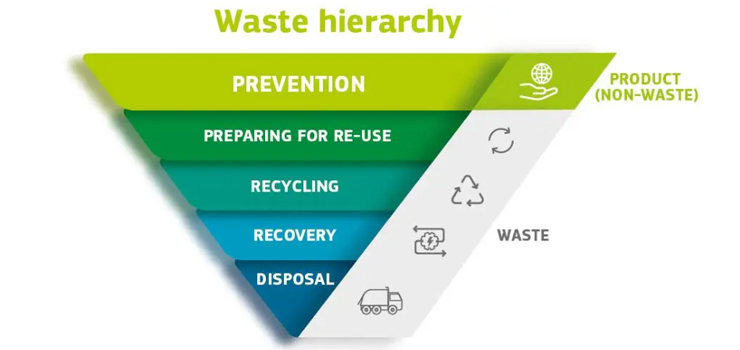
The approach we take is based on a waste hierarchy and the fundamental idea reducing waste and environmental impacts starts with the idea of prevention i.e. avoiding the creation of waste at source. In the example above that means reducing the need to manufacture so many new devices in the first place. If refurbishment isn’t possible, recycling is the next option.
Winning hearts and minds
We can see that making credible claims around environmental sustainability calls for numbers to back up those claims. However, if organisations are going to become truly sustainable it’s about more than meeting legal targets, it’s about instigating behavioural change. Doing that means emotionally engaging people with the cause.
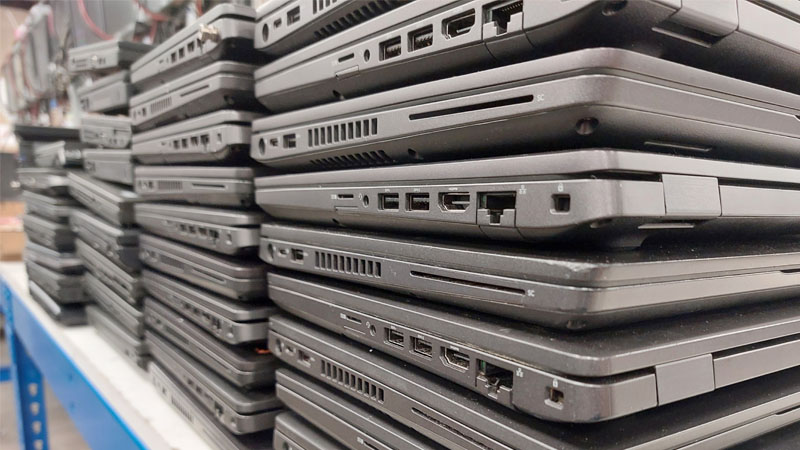
This was the thinking behind an IT amnesty that Converge customer the University of Manchester conducted. Rather than allowing older or unwanted devices to fall into disuse they ran their amnesty in April 2024 asking for students and staff to hand devices in and received an incredible 5.5 tonnes worth with everything from laptop and PCs to games consoles and phones collected. These were then sent to Converge for recycling or refurbishment.
“We had a bigger uptake than anyone expected,” commented John Vass-de-Zomba, the University’s IT Environmental Sustainability Manager. Indeed, one drop-off point became so busy that the University couldn’t keep up! “It was a big visible thing with a physical presence on campus.” Remarked John. Something that people could get on board with.
In 2024 the University prevented 57 tonnes of IT from going to landfill and their recycling efforts saved 407 tonnes of CO2 from entering the atmosphere, but this was only possible because they engaged their students and staff in a powerful way. It all makes sense of course because who benefits from pieces of old tech gathering dust?
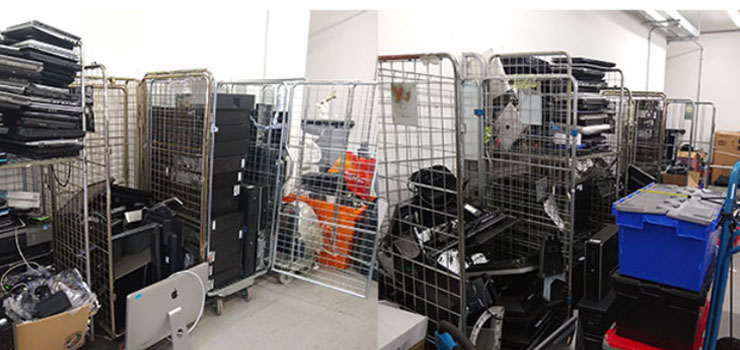
Just some of the unwanted devices collected from University of Manchester.
Money matters
So, we’ve talked about why it’s important to engage heads with numbers and hearts with visible initiatives but there’s another factor that motivates almost all of us – money!
Whether it’s Universities like Manchester or private businesses across the nation all have their eyes on their own financial sustainability. There’s an often-false narrative that environmentally conscious actions are costly. In fact, they can often pay in everything from reduced energy bills to revenue generation as consumers increasingly choose more environmentally products and services.
One vivid example that Converge’s recycling customers see is rebates they receive when they return unwanted, qualifying devices to us. The money customers receive can be spent on buying new or refurbished kit to replace their older devices for example. Since 2022 Converge recycling customers have received over £5.5 million in rebates.
The three routes to sustainability
Sustainability itself needs to be sustainable and that means engaging organisations and individuals in a way that transcends slick marketing and empty claims. Organisations can’t sell products without product specifications any more than they should be able to sell ‘green’ claims without backing them up.
Thankfully, there are now ways for the claims to be backed up with numbers, but numbers are never enough. Appealing to the good in us all and shattering the myths around the costs of being sustainable are also important if we’re going to realise the aims of sustainability in the fullest sense.
-
 Converge brought technology Back to the Future at BETT 2026
-
 Converge Technology Solutions achieves Dual BSI Kitemark™ certification
-
 The Power of IT Recycling: Cut Your Organisation’s Carbon Footprint
-
 Life beyond carbon credits: Maximising Impact
-
 Meet Converge at Bett 2026, The World's Biggest EdTech Event