



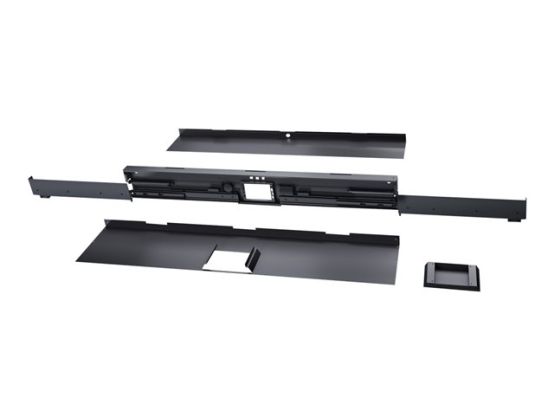
Hot and cold air containment systems designed to maximize cooling predictability, capacity, and efficiency at the rack, row or room level.
- Scalable densities
- Over aisle access
- Fire Safe system
- Ceiling tiles
- Safe slide doors
- One-way locking door
- Modular design
- Active Airflow control
- Efficiency
- EcoLEDgy Driven Lighting
- Air Return system
- Flexibility
- Modular strategy
Scalable densities
This feature allows for higher densities to be achieved by integrating containment with room, row and rack cooling system architectures.
Over aisle access
Tooless removal of individual panels allows access above the aisle for cabling and maintenance.
Fire Safe system
This feature alerts personnel and drops ceiling panels based on temperature to enable fire suppressions system in the room to extinguish the fire.
Ceiling tiles
It closes off the top of the aisle to prevent mixing of the hot and cold airstreams in the IT environment.
Safe slide doors
Emergency break away sliding door enables quick exit in the event of an emergency.
One-way locking door
It secures the hot aisle while allowing for quick exit in case of emergency.
Modular design
Modular design provides scalable solutions to add cooling as demand increases.
Active Airflow control
This feature monitors and actively adjust cooling unit airflow in containment systems, while providing visibility to effective cooling to critical IT equipment.
Efficiency
It increases the capacity of the air conditioner by supplying a warmer return air temperature.
EcoLEDgy Driven Lighting
It has integrated high efficiency LED lighting with on/off motion sensors.
Air Return system
Centralized hot air return system for room and external air handling systems minimizes obstruction of lighting into the aisle and provides cable access from within the contained aisle.
Flexibility
It has support for varying aisle widths, rack heights, rack depths, and single rows. It also supports hot and cold aisle containment.
Modular strategy
Modular design of the mechanical and control systems allows for gradual build-up of the cooling infrastructure to match the cooling demand of the facility. This greatly reduces CAPEX expeditures and provides deferred investment throughout the life of the facility.