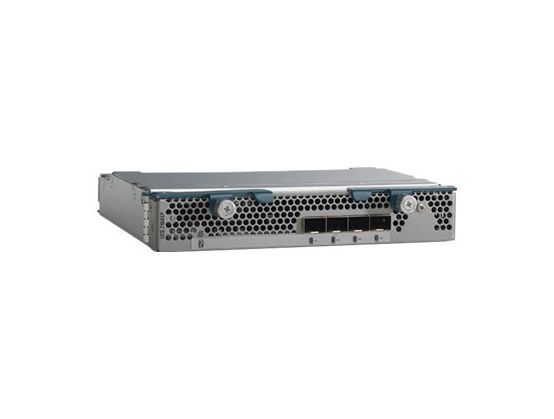
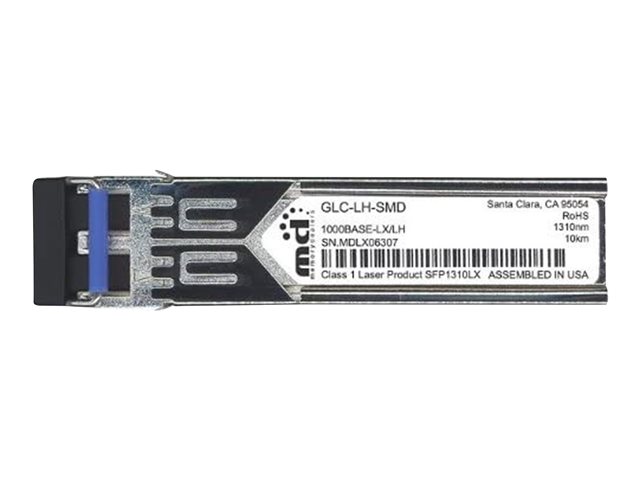
The first product in the Cisco UCS 2100 Series is the Cisco UCS 2104XP Fabric Extender. It has four 10 Gigabit Ethernet, FCoE-capable, Small Form-Factor Pluggable Plus (SFP+) ports that connect the blade chassis to the fabric interconnect. Each Cisco UCS 2104XP has eight 10 Gigabit Ethernet ports connected through the midplane to each half-width slot in the chassis. Typically configured in pairs for redundancy, two fabric extenders provide up to 80 Gbps of I/O to the chassis.
Reduces TCO by removing management modules from the chassis, making the chassis stateless
Provides a single, highly available management domain for all system chassis, reducing administrative tasks
Simplifies operation by automatically synchronizing firmware levels between the fabric extenders and the interconnects
Decreases TCO by reducing the number of network interface cards (NICs), host bus adapters (HBAs), switches, and cables needed
Transparently encapsulates fiber channel packets into Ethernet
Increases availability with an active-active data plane
Reduces TCO by optimizing overall system capacity to match actual workload demands
Removes the need for chassis management modules
Provides a reliable, robust foundation for unifying LAN and SAN traffic on a single transport
Simplifies management of multiple traffic flows over a single network link
Supports different classes of service, enabling both lossless and classic Ethernet on the same fabric
Enables consistent and coherent quality-of-service (QoS) management throughout the system
Enables a consistent operational model between virtual and physical environments
Provides the same level of network visibility for virtualized and non-virtualized environments
Improves diagnostic and troubleshooting capabilities in a virtual environment
Simplifies network and security policy enforcement when migrating virtual machines from one host to another
Increases flexibility with a range of interconnect solutions, including copper Twinax cable for short runs and fiber for long runs
Consumes less power per port than traditional solutions
Compliant StandardsCISPR 22 Class A, BSMI CNS 13438 Class A, CISPR 24, EN 61000-3-2, VCCI Class A ITE, EN 61000-3-3, EN55024, EN55022 Class A, EN50082-1, EN 61000-6-1, AS/NZS 60950-1, ICES-003 Class A, RoHS, UL 60950-1, IEC 60950-1, EN 60950-1, FCC CFR47, EN 300 386