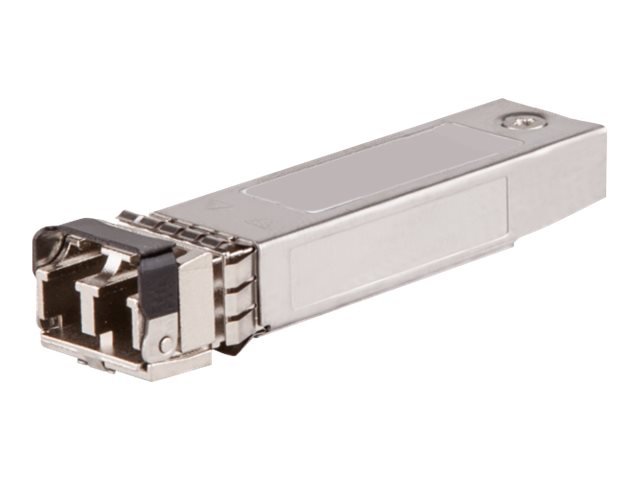




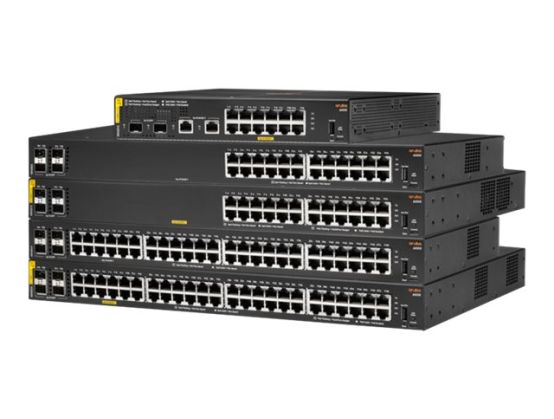
The HPE Aruba Networking CX 6000 Switch Series is modern family of entry level access switches ideal for branch offices, midsize businesses, and small enterprises. Designed for reliable, simple, and security-enhanced access, the HPE Aruba CX 6000 series provides a convenient and cost-effective wired access solution for networks supporting IoT, mobile, and cloud applications. The HPE Aruba Networking CX 6000 Switch Series is based on the Aruba ASIC architecture with the programmable AOS-CX operating system used across the entire Aruba CX portfolio for a more consistent, more efficient operator experience. This fully-managed series has convenient built-in uplinks with up to 740W of Class 4 PoE to support IoT devices such as security cameras and wireless APs. A compact and fanless model is ideal for use in quiet, small work spaces. The HPE Aruba CX 6000 series is easy to deploy and use with flexible management choices, allowing the best fit for your business and network environment.
- The HPE Aruba Networking CX 6000 Switch Series offers Ethernet gigabit connectivity and optional PoE to provide entry level, reliable, and convenient wired access connectivity for enterprise branch offices and SMB networks.
- The HPE Aruba Networking CX 6000 Switch Series is designed with Aruba ASICs that deliver very low latency, increased packet buffering, and adaptive power consumption.
- The HPE Aruba Networking CX 6000 Switch Series provides flexibility to manage and simplify configurations with Aruba NetEdit, Aruba Central , easy to use Web GUI, or industry standard CLI.
Entry Level Aruba CX Access Layer Switches
Simplifies ownership with no switch software licensing or subscriptions required.
Performance and Power
Up to four built-in wire speed 1GbE uplinks remove bottlenecks at the access layer where users and devices connect.
Simplified Configuration and Management
Reduce manual IT operation tasks around initial deployment or on-going configuration changes to accommodate adds, moves, and changes with colorless ports using local user roles and local-MAC-Authentication (LMA).