




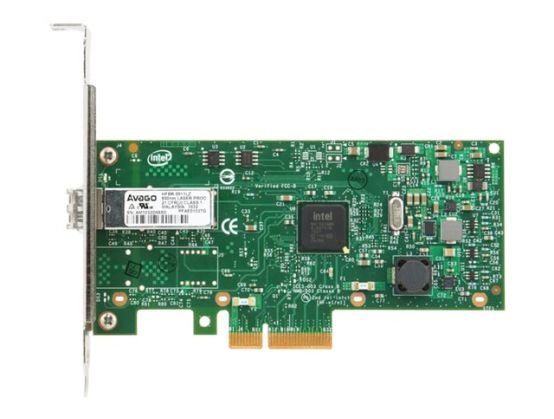
Based on the Intel I350 Gigabit Ethernet adapters from Lenovo build on Intel's history of delivering Ethernet products with flexible design and robust driver support. Mezzanine LAN-on-Motherboard Generation 2 (ML2) is a the cost-effective adapter form factor for System x servers that offers the flexibility advantages of a PCIe adapter while supporting integrated networking features such as Wake-on-LAN and direct connectivity to the server's IMM2 service processor for out-of-band systems management.
- TCP/UDP, IPv4 checksum offloads, and extended Tx descriptors
- IPv6 support for IP/TCP and IP/UDP receive checksum offloads
- Tx TCP segmentation offload (IPv4 and IPv6)
- Transmit segmentation offload
- Interrupt throttling control
- Message Signal Interrupt (MSI) support
- Message Signal Interrupt Extension (MSI-X) support
- Intelligent interrupt generation
- Scalable I/O for Linux
- Low-latency interrupts
- Header/Packet Data Split in Receive
- PCIe v2.1 TLP processing hint requester
- Descriptor ring management hardware for transmit and receive
Enhanced connectivity
The Lenovo ThinkSystem I350-F1 by Intel features dual LC multi-mode connectors, providing robust and reliable connectivity with a data transfer rate of 1 Gbps. This high-speed interface ensures efficient data flow for critical applications and services.
Optimized performance
Equipped with Intel's technologies such as Intel I/O Acceleration Technology (I/OAT) and QuickData Technology, this network adapter enhances data acceleration across the platform, reducing I/O bottlenecks. The inclusion of Single Root I/O Virtualization (SR-IOV) offers improved performance of virtualized systems, making it a suitable solution for environments demanding high throughput and lower latency.
Advanced networking features
Supporting a wide range of IEEE standards including 802.1Q, 802.1p, and 802.3az, the Lenovo ThinkSystem I350-F1 network adapter is designed for versatile and efficient network infrastructure. Features like TCP/IP checksum offload, Receive Side Scaling (RSS), and Virtual Machine Device Queues (VMDq) significantly improve data processing efficiency, ensuring smooth and reliable network performance.